
How to Choose the Lining and Electrode for an Electromagnetic Flow Meter
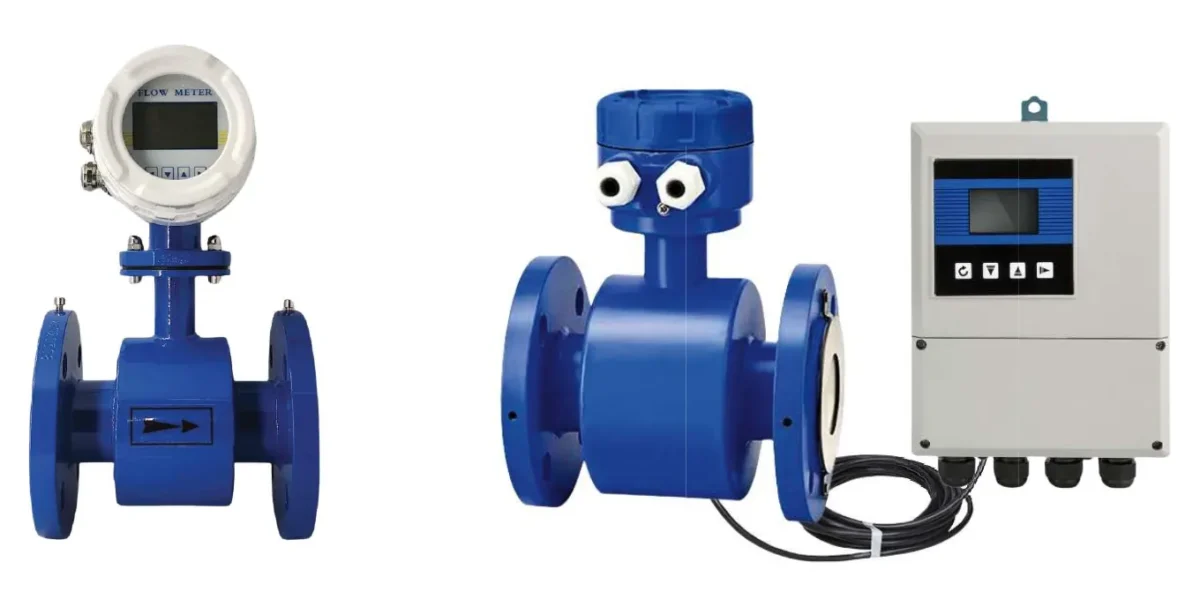
An electromagnetic flow meter only lasts as long as the two parts that touch the liquid: the lining and the electrodes. Choose them wrongly and an aggressive effluent can destroy a new meter within months. Here is how to get it right.
Step 1: Choose the lining
The lining insulates the liquid from the metal tube. Pick it by chemistry, temperature and abrasion.
| Lining | Symbol | Performance | Temperature | Typical use |
|---|---|---|---|---|
| Rubber | CR | Wear resistant; handles average concentrations of acid, alkali and salt solutions | ≤ 70 °C | Tap water, industrial water, sea water |
| PTFE | PTFE (F4) | Chemically stable; resists boiling hydrochloric acid, sulphuric acid, aqua regia and concentrated alkali | ≤ 150 °C | Corrosive acids, salts and solutions |
| Fluorinated ethylene propylene | F46 / FEP | Chemical resistance equivalent to F4 with higher tensile strength | ≤ 180 °C | Corrosive acid and salt solutions, negative pressure |
| Polyurethane | PU | Excellent wear resistance; not suitable for acids | ≤ 70 °C | Slurry, pulp and other abrasive media |
Step 2: Choose the electrode
The electrodes are in direct contact with the liquid and must not corrode.
| Electrode | Suitable for | Not suitable for |
|---|---|---|
| 316L | Domestic water, industrial water, raw water, city sewage, weakly corrosive acid, alkali and salt solutions | Strong acids and alkalis |
| Hastelloy B | Non-oxidising acids below 10%, sodium hydroxide below 50%, ammonium hydroxide at all concentrations, phosphoric and organic acids | Nitric acid |
| Hastelloy C | Mixed acids (e.g. chromic + sulphuric), oxidising salts such as sea water containing Cu⁺⁺⁺ and Fe⁺⁺⁺ | Hydrochloric acid |
| Titanium | Salts (sodium, potassium, chloride, ammonium salts, sodium hypochlorite), potassium hydroxide below 50%, ammonium and barium hydroxide | Hydrochloric, sulphuric, phosphoric, hydrofluoric and other reducing acids |
| Tantalum | Hydrochloric acid below 40%, dilute and concentrated sulphuric acid (not oleum), chlorine dioxide, ferric chloride, hypochlorous acid, sodium chloride, lead acetate, nitric acid | Alkalis, hydrofluoric acid |
| Platinum | Almost all acid, alkali and salt solutions, including fuming sulphuric and fuming nitric acid | Aqua regia, ammonium salts |
Step 3: Check conductivity and velocity
Magnetic flow meters need a minimum liquid conductivity of 5 µS/cm, so they cannot measure oils, solvents or very pure RO permeate. Size the meter so normal velocity sits roughly between 1 and 3 m/s; use the flow range table to check.
Quick recommendations
- Sewage, raw water, treated water: CR lining + 316L electrodes
- Acidic or alkaline effluent: PTFE or FEP lining + Hastelloy C or titanium (check the table)
- Abrasive slurry: PU lining + 316L or WC electrodes
- Milk and beverages: sanitary meter with clamp connections
Still unsure? Send us your liquid composition and temperature and we will recommend the combination.